
A woman may finish a long day feeling unusually exhausted, notice discomfort around her shoulders or back, or mistake an uneasy feeling in her chest for acidity. With work, family responsibilities and everyday commitments taking priority, these symptoms can easily be brushed aside. Sometimes, even a good night’s rest does not make the discomfort go away.
Although these experiences can have several explanations, some may also be warning signs of a heart attack. Heart Attack Symptoms in Women do not always begin with the dramatic chest pain many people expect. Women may also experience nausea, breathlessness, unusual fatigue or discomfort in the back and jaw, making certain warning signs easier to overlook.
Understanding Heart Attack Symptoms in Women is not about worrying over every ache or episode of tiredness. It is about recognising unusual changes, knowing when to seek medical attention and understanding why timely evaluation matters.
Why Heart Attack Symptoms May Look Different
Heart attacks affect both men and women, and many symptoms overlap. Chest discomfort remains the most common warning sign in both. However, women may be more likely to experience additional symptoms such as nausea, vomiting, unusual fatigue, breathlessness and discomfort in the back or jaw.
Differences in coronary artery disease patterns and the underlying mechanisms of a heart attack may partly contribute to these variations. Certain conditions, including coronary microvascular dysfunction and spontaneous coronary artery dissection, are also recognised in women.
| Commonly recognised symptoms | Additional symptoms that may be more noticeable in women |
| Chest pressure or tightness | Nausea or vomiting |
| Arm or shoulder discomfort | Back, neck or jaw discomfort |
| Shortness of breath | Unusual or unexplained fatigue |
| Cold sweats | Dizziness or lightheadedness |
These are general patterns, not separate symptom profiles. Women can experience intense chest pain, while men can also experience nausea, fatigue and other less familiar symptoms.
Expert Insight: A heart attack can occur even in younger, premenopausal women. Age alone should never be used to dismiss concerning cardiac symptoms.
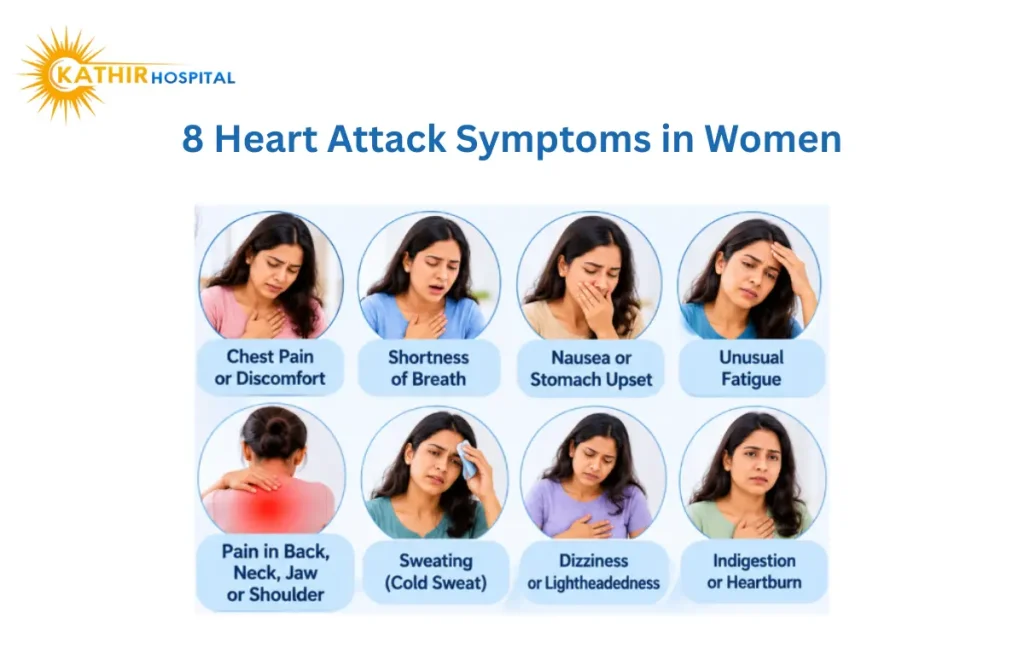
Warning Signs Women Should Recognise
Symptoms may develop suddenly or gradually. Some appear together, while others may be more noticeable than the familiar chest discomfort.
- Chest pressure or tightness: A feeling of squeezing, heaviness, fullness or discomfort in the centre of the chest. It may last several minutes or disappear and return.
- Back, shoulder or jaw pain: Unusual discomfort may develop in the upper back, neck, jaw or one or both arms.
- Shortness of breath: Difficulty breathing can occur with or without noticeable chest discomfort.
- Nausea or indigestion-like discomfort: Some women experience an unsettled stomach, nausea, vomiting or upper abdominal discomfort.
- Unusual fatigue: Sudden or unexplained exhaustion that feels different from ordinary tiredness may accompany other warning signs.
- Cold sweats and dizziness: Unexpected sweating, lightheadedness or a feeling of faintness can also occur.
Not every woman experiences all these symptoms. A heart attack may present with only a few warning signs, so waiting for every symptom to appear can delay necessary care.
Not Every Discomfort Is a Heart Attack
Experiencing fatigue, acidity, chest discomfort or back pain does not automatically mean something is wrong with the heart. Many everyday conditions can produce similar sensations.
Indigestion can cause burning or discomfort around the chest and upper abdomen. Muscle strain may cause pain around the shoulders or chest, while inadequate sleep and stress can contribute to tiredness. Anxiety can sometimes produce breathlessness, sweating and palpitations.
The important distinction is whether a symptom is unusual, unexplained, persistent or accompanied by other warning signs.
Clinical Perspective: Symptoms alone cannot reliably confirm or rule out a heart attack. Doctors consider the clinical picture alongside an ECG and cardiac troponin blood tests to assess possible heart muscle injury.
Myths vs Reality: Understanding Women’s Heart Health
| Myth | Reality |
| Heart attacks always cause severe chest pain. | Some involve less obvious discomfort or accompanying symptoms that may be overlooked. |
| Women rarely experience heart attacks. | Heart attacks affect women too, including younger women. |
| No chest pain means no heart attack. | A heart attack can occur without prominent chest pain. |
| Only older women are at risk. | Younger women can also experience acute coronary events. |
| Indigestion is never related to the heart. | Some cardiac events can cause nausea or indigestion-like discomfort. |
| Every episode of tiredness indicates a heart problem. | Fatigue has many possible causes, but sudden, unusual fatigue with other warning signs needs attention. |
What Increases a Woman’s Risk?
Age is only one part of cardiovascular risk. Certain health conditions and life stages can influence a woman’s heart health.
Important risk factors include:
- High blood pressure and diabetes: Both can damage blood vessels and increase cardiovascular risk.
- High cholesterol: Unhealthy cholesterol levels can contribute to plaque formation in coronary arteries.
- Smoking and physical inactivity: These increase the likelihood of developing cardiovascular disease.
- Family history: A history of early heart disease in close relatives may increase risk.
- Pregnancy-related complications: Conditions such as pre-eclampsia, gestational hypertension and gestational diabetes are associated with increased cardiovascular risk later in life.
- Menopause and ageing: Cardiovascular risk generally increases with age, and changes associated with menopause may influence heart health.
Having one or more risk factors does not mean a heart attack is inevitable. Understanding them helps women discuss appropriate prevention and monitoring with their doctors.
When Should a Woman Seek Medical Attention?
Knowing when to act is more important than trying to identify the exact cause at home.
Seek emergency medical help immediately if there is chest pressure or discomfort lasting several minutes or returning repeatedly, sudden breathlessness, unexplained upper-body discomfort, or a combination of nausea, cold sweats, dizziness and other possible heart attack symptoms.
Do not wait for symptoms to become severe. Even when the cause is uncertain, suspected heart attack symptoms require emergency assessment. Call an emergency ambulance service rather than driving yourself or waiting for a routine appointment.
If symptoms are not currently an emergency but remain unexplained or recur, arrange a medical consultation to understand their cause.
How Doctors Identify a Heart Attack
Doctors consider symptoms, medical history and examination findings before recommending investigations.
- Electrocardiogram (ECG): Records the heart’s electrical activity and helps identify changes associated with a heart attack.
- Cardiac troponin test: Measures a protein released into the bloodstream when heart muscle cells are injured. Repeat testing may be necessary to identify changes over time.
- Echocardiogram: Uses ultrasound to assess the heart’s structure and pumping function when clinically indicated.
- Coronary angiography: May be recommended to identify narrowed or blocked coronary arteries and guide further treatment.
A normal initial ECG or an early negative troponin result does not always rule out a heart attack. Doctors may recommend repeat tests and continued assessment when necessary.
Treatment Depends on the Type and Severity
Treatment aims to restore blood flow to the heart, limit muscle damage and prevent further complications. The approach depends on the type of heart attack and the patient’s overall condition.
- Emergency medical management: Medicines and supportive care are selected according to the patient’s condition.
- Angioplasty and stenting: A catheter-based procedure that opens a narrowed or blocked coronary artery and may involve placing a small stent to maintain blood flow.
- Coronary artery bypass surgery: Considered in selected cases when the location and extent of coronary artery disease make bypass the appropriate option.
- Recovery and cardiac rehabilitation: Prescribed medicines, follow-up, risk-factor management and supervised rehabilitation support recovery and long-term heart health.
Treatment is individualised. Not every patient requires the same procedure or combination of treatments.
Recognising the Signs Is an Act of Care
Not every episode of fatigue, acidity or discomfort points to a heart attack. However, unusual symptoms should not always be dismissed as the result of a busy routine or everyday stress. Paying attention to changes in the body and seeking timely medical evaluation can make an important difference.
For women who need cardiac guidance, Kathir Hospital, Trichy, offers Cardiology services, where patients can consult a cardiologist for heart-related concerns, evaluation and appropriate treatment guidance. Understanding the warning signs and knowing where to seek medical care are important steps towards protecting long-term heart health.
Remember: If a heart attack is suspected, seek emergency medical assistance immediately rather than waiting for a scheduled cardiology consultation.